

For many tertiary students, the financial pressure that comes with pursuing higher education goes far beyond tuition fees.
Transportation, accommodation, learning materials, food, internet data and other daily academic expenses can quickly become a burden, particularly for students from families already struggling to make ends meet.
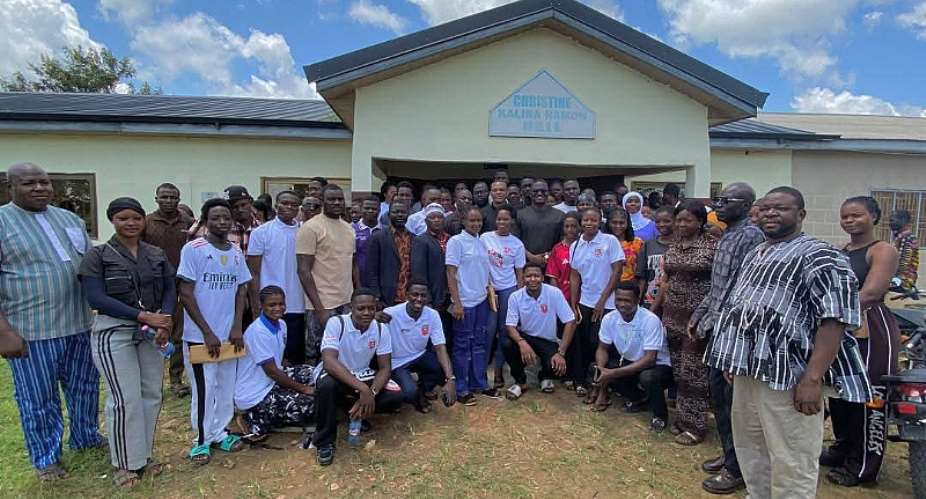
It is against this backdrop that the Member of Parliament for Chiana-Paga, Nikyema Billa Alamzy, has extended financial support to 350 tertiary students in the constituency.
The beneficiaries have received GH¢1,000 each, representing a total investment of GH¢350,000 from the MP’s Common Fund to support their education.
The initiative, according to the MP, is part of efforts to reduce some of the financial difficulties confronting young people pursuing tertiary education.
From 169 students to 350
What makes this year’s intervention particularly significant is the increase in the number of beneficiaries.
Last year, 169 tertiary students benefited from the programme. This year, that number has more than doubled to 350.
For students who are already struggling to meet basic academic needs, the support may not solve every financial challenge, but it can provide some breathing space.
A GH¢1,000 contribution could help a student purchase textbooks, settle transportation costs, pay for internet data, support accommodation expenses or meet other pressing educational needs.
The MP has indicated that the programme could reach even more students next year.
He has pledged to increase the number of beneficiaries to 500, signalling an intention to broaden the scheme and make educational support available to more young people within the constituency.
MP explains how beneficiaries were selected
One of the issues that often surrounds political scholarship and educational assistance programmes is the question of how beneficiaries are selected.
Mr. Alamzy said he deliberately stayed out of the selection process.
According to him, he did not personally add a single student to the list of 350 beneficiaries. Instead, the selection was carried out through branches within communities across the constituency.
The approach, he explained, was intended to push the selection process down to the grassroots and ensure that students who genuinely needed assistance could benefit.
The MP subsequently urged the beneficiaries to use the money for its intended purpose and remain focused on their education.
He challenged them to look beyond obtaining certificates and aspire to become professionals and future leaders who can contribute meaningfully to Ghana’s development.
A warning beyond the classroom
At the presentation ceremony, speakers also used the opportunity to draw attention to a growing concern among young people: drug abuse.
Constituency Chairman of the National Democratic Congress (NDC), Dickson B. Adiali Ayagitam, encouraged the beneficiaries to take their studies seriously and warned them against substance abuse.
He stressed that drug abuse could undermine not only their academic ambitions but also their health and long-term prospects.
The District Chief Executive, Stephen Akurugo, similarly cautioned the students to stay away from drugs and other activities that could jeopardise their future.
His comments highlight an important reality: financial assistance can help a student remain in school, but the student must also make responsible choices to turn that opportunity into a meaningful future.
Education support goes beyond cash
The financial support is not the only educational intervention attributed to the MP.
According to the DCE, Mr. Alamzy has also supported educational infrastructure projects within the constituency, including renovations at Tedam JHS ‘A’, Kandiga Primary School and Katiu Primary School.
The combination of direct student support and investment in school infrastructure reflects two sides of the education challenge.
While infrastructure creates a better environment for learning, direct financial assistance can help individual students overcome some of the personal economic barriers that may threaten their education.
Students express appreciation
The beneficiaries welcomed the intervention, describing the GH¢1,000 support as useful in easing some of the financial pressures associated with tertiary education.
For some students, such assistance can mean one less bill to worry about or an opportunity to purchase something they have been postponing because of financial constraints.
But perhaps the bigger significance of the programme lies in the message it sends to young people in the constituency: that their education is worth investing in.
The bigger question
Ghana continues to grapple with the cost of tertiary education and the financial difficulties faced by students and their families.
Government interventions, scholarships, student loans, institutional support and constituency-level initiatives can all play a role in keeping young people in school.
However, the sustainability of such interventions remains important.
As the Chiana-Paga programme expands from 169 beneficiaries last year to 350 this year, and with a target of 500 next year, the focus will inevitably shift to how many more students can be reached and whether the support can consistently make a difference in their academic journey.
For the 350 students who have received the money this year, however, the immediate priority is much simpler: make the opportunity count.
The challenge now rests with the beneficiaries to turn the assistance into progress — and eventually, into the kind of success that can benefit not only themselves and their families but the wider Chiana-Paga community.
Source: ModernGhana