

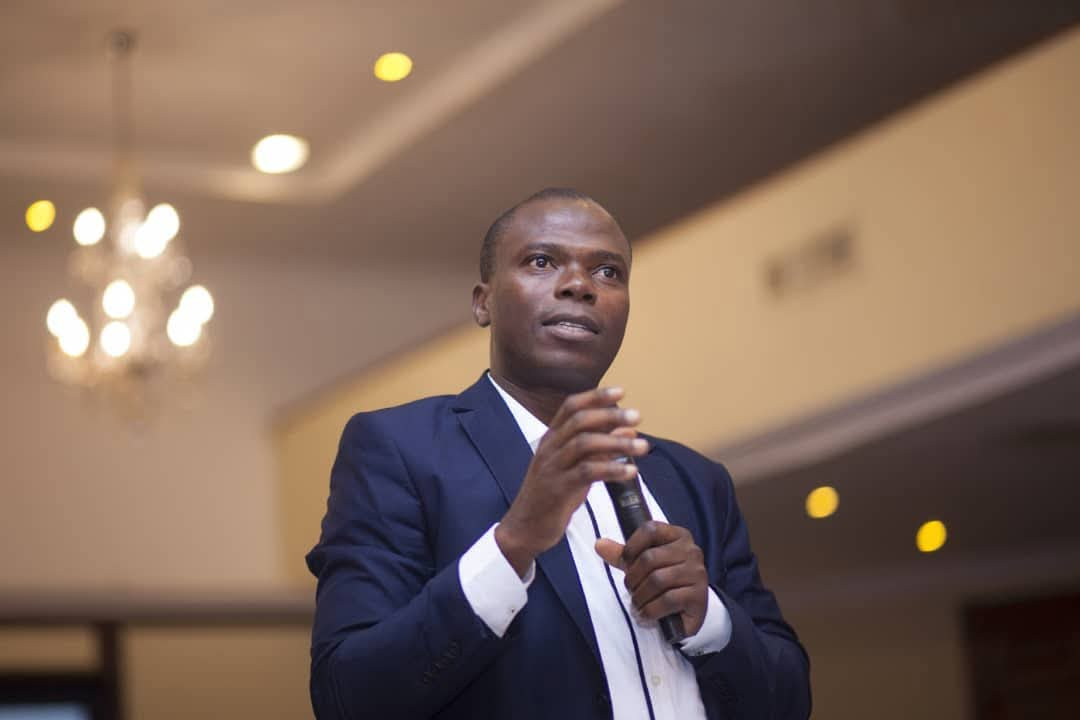
Journalist and Executive Director of The Fourth Estate, Sulemana Braimah, has publicly commended Foreign Affairs Minister Samuel Okudzeto Ablakwa for what he describes as an example of transparency and accountability in government.
In an opinion shared on his Facebook page, Braimah argued that transparency should not be a principle that politicians demand only when they are in opposition. Rather, he said, it should continue to guide their conduct when they assume public office.
According to him, Ablakwa’s conduct as Foreign Affairs Minister has demonstrated a willingness to uphold some of the same accountability standards he advocated while serving in opposition.
Transparency should be practised in government’
Braimah noted that Ablakwa was known during his time in opposition for using his position as a Member of Parliament to demand greater transparency and accountability from governments and public institutions.
What has particularly impressed him, he said, is that Ablakwa appears to be maintaining that approach now that he is part of government.
Braimah said his assessment is partly based on the experience of The Fourth Estate, the investigative journalism organisation he leads.
Braimah recounted how The Fourth Estate submitted Right to Information (RTI) requests in April to almost all government ministries.
The requests sought information on their budgetary allocations and actual disbursements covering the period from 2022 to 2025.
According to Braimah, the Ministry of Foreign Affairs was among the first ministries to acknowledge the request.
He said the Ministry subsequently provided the requested information and went further by supplying a more detailed breakdown than the journalists had initially requested.
Braimah contrasted this response with what he described as the failure of several other ministries to provide similar information despite follow-ups and direct RTI appeals to the ministers responsible.
Handling of extortion allegations
Braimah also cited another example involving an investigation by The Fourth Estate into allegations of extortion connected to attestation endorsements at the Ministry of Foreign Affairs.
According to him, the Ministry did not close its doors to the journalists or avoid questions about the allegations.
He said an interview request received a prompt response, after which senior officials of the Ministry granted the interview and provided detailed explanations concerning the issue.
For Braimah, the response demonstrated how a public institution can engage with journalists even when facing difficult questions.
Ministry responded after publication
Braimah further praised the Ministry’s response after The Fourth Estate published its investigation.
He said the Ministry publicly responded to the story, explained developments surrounding the issue and outlined measures being taken to address the problem.
For him, acknowledging concerns and explaining what is being done to address them is preferable to simply denying problems or avoiding scrutiny.
He described this as the kind of response that should become normal across Ghana’s public institutions.
The real test comes when you are in power
One of the central arguments in Braimah’s commentary is that politicians have an easier time demanding transparency when they are in opposition.
The real test, he suggested, comes when those same politicians gain power and suddenly become the people journalists, civil society organisations and citizens are questioning.
Transparency is easiest to preach when in opposition. The real test comes when you are in power.
Braimah believes leaders should be willing to subject themselves and the institutions they lead to the same scrutiny they demanded from previous governments.
No institution is without problems
The journalist also acknowledged that no public institution can be expected to operate without challenges.
For him, the more important issue is how leaders respond when problems emerge.
He argued that responsible leadership requires public officials to acknowledge problems, allow scrutiny and take concrete steps to address them.
Rather than attempting to protect an institution’s image by avoiding difficult questions, leaders should see scrutiny as part of public accountability.
A standard for other public institutions
Braimah’s commendation of Ablakwa ultimately extends beyond one minister or one ministry.
He hopes the approach he described at the Ministry of Foreign Affairs can become more widespread across Ghana’s public sector.
He called for transparency and openness to scrutiny to become the norm rather than an exception.
His message also highlights a broader principle of democratic governance: accountability should apply regardless of whether a political party is in opposition or in government.
For citizens, journalists and civil society organisations, access to information and the willingness of public institutions to answer legitimate questions are important parts of a functioning democracy.
Braimah ended his commentary by expressing hope that the approach would continue under Minister Ablakwa and inspire similar standards across government.
This article is based on an opinion shared by journalist Sulemana Braimah on his Facebook page. The views expressed are those of the author.