

Students Must Become Champions of Peace — UN Resident Coordinator
The United Nations Resident Coordinator in Ghana, Zia Choudhury, has urged students to become champions of peace in their schools, homes and communities, stressing that building a peaceful society requires continuous effort and collective responsibility.
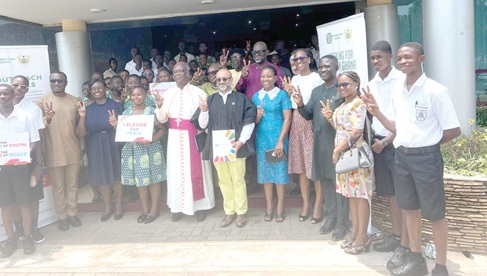
He made the call during the commemoration of the 2026 International Day of Peace, organised by the National Peace Council (NPC) in collaboration with its partners for students of Accra Senior High School and Accra Girls Senior High School.
Delivering the keynote address at the event, Mr Choudhury emphasised that peacebuilding was not a one-time activity but a continuous process that required commitment, dialogue and cooperation from all sections of society.
He commended the National Peace Council for its consistent efforts towards promoting peaceful coexistence in Ghana and called for greater involvement of the private sector in peacebuilding initiatives, referencing Sustainable Development Goal 17, which focuses on partnerships for sustainable development.
The event, held last Monday at the Ghana-India Kofi Annan Centre of Excellence in ICT in Accra, was organised under the theme, “Invest in Peace – For Everyone, Everywhere, Every Day.”
It brought together representatives from government institutions, diplomatic missions, development partners, civil society organisations, traditional and religious authorities, youth groups and other peacebuilding stakeholders.
UN Coordinator Warns Against Complacency
Mr Choudhury cautioned that Ghana must not take its peace and stability for granted, pointing to concerns such as violence in senior high schools, poverty, inequality, hate speech and growing global polarisation.
He also expressed concern about conflicts in neighbouring West African countries, including Burkina Faso, Côte d’Ivoire and Mali, explaining that developments in these countries should matter to Ghana because of shared borders and interconnected regional challenges.
Sharing a personal experience from his childhood in Glasgow, Scotland, Mr Choudhury recalled how football loyalties sometimes reflected religious divisions. He used the experience to encourage students to reject prejudice and embrace mutual respect, regardless of their backgrounds or beliefs.
He challenged the students to make practical commitments to peaceful public discussions, constructive dialogue and the rejection of hate speech, noting that everyday actions could contribute significantly to preventing conflict.
Peacebuilding Is Everyone’s Responsibility
The UN Resident Coordinator stressed that maintaining peace should not be left solely to the government, the National Peace Council, traditional leaders, churches or mosques. Instead, every Ghanaian has a role to play in protecting the country’s peace and promoting understanding among people.
Speaking at the programme, the Chairman of the NPC Governing Board, Most Rev. Emmanuel Kofi Fianu, also called for sustained national investment in peacebuilding.
He warned that Ghana’s reputation for peace and democratic stability could not be taken for granted and required continuous attention, commitment and deliberate action.
According to him, Ghana’s position at 76th on the latest Global Peace Index ranking should serve as a reminder of the need for vigilance and sustained efforts to safeguard national peace.
“Peace is not a permanent inheritance; but a public good that must be renewed through deliberate action,” he stated.
Most Rev. Fianu further disclosed that between January and September 2026, the National Peace Council undertook eight major mediation and fact-finding interventions across six regions as part of its preventive peacebuilding mandate.
National Peace Council Intensifies School Outreach
The NPC Governing Board Chairman also revealed that the council had reached 118 schools across the country during the first two quarters of 2026 through educational programmes promoting peaceful coexistence, tolerance and non-violence.
The outreach initiatives also included education on the Vigilantism and Related Offences Act, 2019 (Act 999), as part of broader efforts to strengthen awareness of the importance of peace and lawful conduct.
Other speakers at the event included Bishop Victor Osei, a member of the NPC Governing Board, who encouraged the students to take personal responsibility for promoting peace and to chart their own path towards peaceful coexistence.
Sheikh Aremeyaw Shiabu, spokesperson for the National Chief Imam, called for stronger counselling services in schools to help address tensions and prevent violence among students.
Students from Accra Senior High School and Accra Girls Senior High School actively participated in the programme, which ended with a renewed call for Ghanaians to invest in peace through tolerance, respect, dialogue and responsible conduct every day.
The commemoration reinforced the message that lasting peace begins with individual choices and collective action, with students playing an important role in building safer schools and more peaceful communities.