

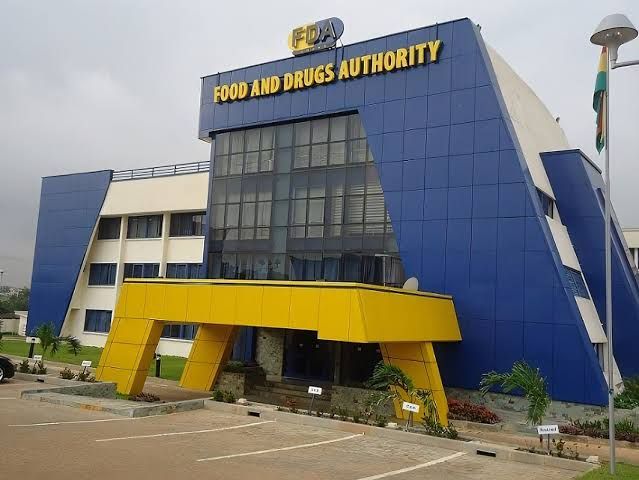
The Food and Drugs Authority (FDA) has cautioned the public against buying or consuming food and beverages that may have been affected by floodwater.
The warning comes as Ghana continues to deal with the effects of flooding in some communities, raising concerns about the safety of food products that may have come into contact with contaminated water.
According to the FDA, consumers should be particularly careful when purchasing food and drinks from areas affected by flooding.
Why flood damaged food can be dangerous
Floodwater is not simply rainwater.
As it moves through streets, drains, homes, markets and other areas, it can pick up sewage, chemicals, waste and other harmful substances. When such water comes into contact with food or beverages, the products can become contaminated.
This means a packaged product may look perfectly normal on the outside but still pose a health risk if its contents have been exposed to contaminated floodwater.
The FDA’s warning is therefore intended to prevent consumers from taking unnecessary risks with food simply because it appears affordable or undamaged at first glance.
Don’t buy food simply because it looks okay
One of the difficulties following floods is that some affected products may find their way back into the marketplace.
A damaged carton, swollen package, wet label or visibly contaminated container may be an obvious warning sign. But consumers should not assume that a product is safe simply because there is no visible damage.
The safest approach is to avoid food and beverages that are suspected to have been exposed to floodwater.
The FDA’s message can be summed up simply: if you are not sure about the safety of a food product, do not eat it.
Consumers urged to be extra careful
For households already dealing with the financial consequences of flooding, the temptation to buy cheaper food products can be understandable.
However, saving a few cedis on a questionable food item could result in much greater costs if it leads to food poisoning or other health problems.
Consumers are therefore encouraged to pay attention to the condition of products before purchasing them, especially in areas recently affected by flooding.
They should also be cautious when buying food from informal locations where the history and storage conditions of products may be difficult to establish.
A warning for traders too
The responsibility does not rest with consumers alone.
Food vendors, retailers and distributors have a duty to ensure that products exposed to floodwater do not return to the food supply chain.
Flood-damaged products should not be repackaged, cleaned up and sold to unsuspecting customers simply because they appear marketable.
Such practices could put entire communities at risk.
The FDA’s intervention therefore serves as a reminder that food safety becomes even more important during and after flooding, when contamination risks can increase.
Protecting families starts with what we eat
Flooding can destroy homes, businesses and livelihoods within hours. But its effects can continue long after the water recedes.
Food contamination is one of the less visible risks that can emerge in the aftermath.
For consumers, the message is straightforward: be careful about what you buy, check the condition of food and beverage packages, and do not take chances with products that may have been exposed to floodwater.
When it comes to food safety, an apparently cheap bargain may not be worth the risk.
Source: 3News